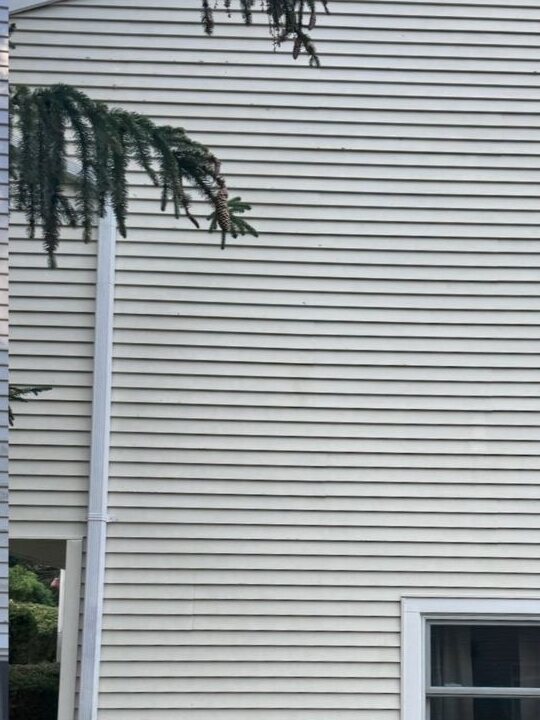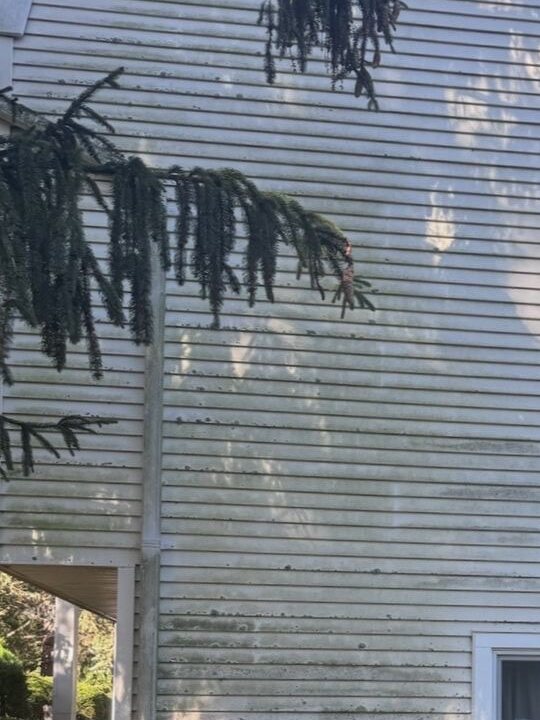
What are those black streaks on my roof — and why does Ocean County get them so bad?
Those black streaks are a cyanobacteria called Gloeocapsa magma — a living organism that feeds on the limestone filler in asphalt shingles. It spreads via airborne spores, thrives in humidity, and darkens as it builds up a protective pigmented shell. Left alone it eats through granules, accelerates UV damage, and can take years off your roof's life.
You're not imagining it — Ocean County roofs really do streak faster than houses inland. The combination of coastal humidity, pine-tree shade on the north and west faces, and salt-laden air creates a textbook environment for Gloeocapsa magma. Once one roof on a street gets it, spores drift over to neighbors. It's not a sign your shingles are cheap or that you neglected the roof; it's just the Jersey Shore climate doing what it does.
Moss and lichen are different organisms but follow the same pattern — they anchor into the granules, hold moisture against the shingle surface, and cause physical damage as they grow. North-facing roof sections in shaded neighborhoods around Toms River and Berkeley Township can go from clean to visibly green within a single season.
Inland NJ homes might see black streaks every 5–7 years. In Ocean County — especially on north-facing, tree-shaded roofs near the bay — it can happen in 2–3 years. The salt air doesn't cause the algae directly, but it keeps surfaces damp longer after rain, which is exactly what Gloeocapsa magma needs to colonize and spread.
The fix is not replacing the shingles. It's killing the organism. That's what professional roof cleaning does — and it costs a fraction of a new roof.
Why can't you just pressure wash a roof? What's soft washing?
Pressure washing strips the granules off asphalt shingles, voids most roofing warranties, and doesn't even kill the algae — it just blasts off the surface layer, so it grows back within months. Soft washing uses low pressure (about 100 PSI, garden-hose level) and a professional biocide solution that kills the algae at the root. It's the method the Asphalt Roofing Manufacturers Association officially recommends.
The granules on asphalt shingles are not decorative. They shield the underlying fiberglass mat from UV radiation and give the shingle its rated lifespan. A pressure washer at 2,000–3,000 PSI physically blasts those granules into your gutters. You might clean the roof, but you've just aged it several years in the process — and your manufacturer's warranty likely won't cover the damage.
| Method | How it works | Safe for shingles? | Kills algae at root? | Warranty impact |
|---|---|---|---|---|
| Soft washing | Low pressure (~100 PSI) + biocide solution | Yes — ARMA recommended | Yes — kills spores | None |
| Pressure washing | High pressure (2,000–3,000 PSI), water only | No — strips granules | No — surface only | Often voids warranty |
| DIY bleach rinse | Garden hose + bleach solution | Usually OK if diluted | Partial — less effective chemistry | Low risk if low pressure |
Soft washing is the only method that cleans safely AND kills the organism causing the streaks.
If you're comparing quotes and one contractor is talking about the cleaning solution and dwell time while another is talking about PSI and wand tips, you want the first one. The chemistry is what does the work on a roof — not the pressure. Read our guide on soft washing vs. pressure washing for a deeper breakdown across all surfaces.
Hiring a generic pressure-washing company to do a roof. Plenty of crews will take the job and point a wand at your shingles. You'll see results on the day — and regrowth within 3–4 months because the spores weren't killed. Worse, you may have lost years of granule life. Always ask specifically whether the crew uses a no-pressure soft-wash solution on roofs.
What does a professional roof soft wash actually include, step by step?
A professional roof soft wash involves pre-wetting and protecting your landscaping, applying a biocide cleaning solution and letting it dwell, gently rinsing at low pressure, treating gutters and fascia, and a final rinse of the surrounding area. The whole process takes 1–3 hours depending on roof size and algae load.
Here is exactly what a professional roof soft wash includes on a typical Ocean County home:
- 1Pre-soak and protect landscaping
Before any solution touches the roof, the crew thoroughly pre-wets all plants, shrubs, and grass below the drip line. Tarps are placed over sensitive plantings. This is non-negotiable — diluted sodium hypochlorite can damage plants if it pools in concentrated form without prior soaking.
- 2Apply the soft-wash solution
A professional-grade biocide blend — typically a diluted sodium hypochlorite solution plus a surfactant to help it cling to the shingle surface — is applied from the ridge down using a low-pressure applicator. The surfactant keeps the solution on the roof rather than sheeting off immediately.
- 3Dwell time
The solution is left to dwell for 10–20 minutes (longer in cooler or overcast conditions). This is when the chemistry kills Gloeocapsa magma, moss spores, and lichen at the cellular level. Rushing this step or applying on a hot, sunny day (when the solution evaporates too fast) is the number-one reason DIY roof treatments fail.
- 4Low-pressure rinse
After dwell time, the roof is rinsed at low pressure — roughly garden-hose level, never anything that could displace granules. The dead algae, moss, and residue wash into the gutters and down the downspouts.
- 5Gutter and fascia flush
The gutters collect the runoff from the treatment, so a quick flush and check is included. Fascia and soffit that received any overspray are rinsed clean. Some crews also do a light fascia brightening at this stage.
- 6Final landscape rinse
Every bed, shrub, and grass area that was pre-soaked gets a final rinse to dilute any solution that dripped or ran off. A professional crew leaves your landscaping in the same condition they found it — or better.
You'll notice results immediately — the black streaks start to fade as the solution works, and the roof continues to brighten over the following few weeks as dead algae weathered away with rain. This continued improvement is normal and a sign the chemistry did its job.
What are the most common roof cleaning mistakes to avoid?
The biggest roof cleaning mistakes are using high pressure instead of soft washing, applying solution on a hot sunny day so it evaporates before dwelling, skipping landscaping protection, using too-weak chemistry that doesn't actually kill the spores, and cleaning a roof that's already at end-of-life. Any one of these can turn a worthwhile investment into wasted money.
Mistake 1: Using any pressure at all
Pressure washers feel powerful and effective. On a roof they're destructive. Even a 'light' 1,500 PSI pass displaces granules. If you're evaluating a contractor and they say they'll 'go easy' with the pressure washer on your roof — that's not a soft wash. Genuine soft washing means the wand pressure is barely above a garden hose.
Mistake 2: Applying solution in direct sun or high heat
Professional crews watch the forecast carefully. If the shingle surface is hot, the sodium hypochlorite solution evaporates before it can dwell and kill. The roof looks treated, but regrowth comes back within months. On a hot July afternoon in Ocean County, a reputable crew will either start before 8 a.m. or reschedule — not rush through in the midday heat.
Mistake 3: Skipping landscaping protection
A diluted bleach solution running off a roof in quantity can damage grass and burn shrubs if they're not pre-soaked and rinsed. This is often where cheap quotes cut corners. Always ask whether landscaping protection is included before you book.
Mistake 4: Treating a failing roof
If your shingles are curling, cracking, or losing granules on their own, cleaning won't save the roof. You'd be spending $400–$700 for curb appeal on a roof you'll replace in a year or two. A good contractor will tell you honestly if your roof isn't a candidate — a bad one will take your money anyway. See the 'Is it worth it?' section below.
Ask the contractor: 'What PSI will you use on the roof surface?' The right answer is something like 'we don't pressure the shingles — we apply solution at low pressure and let it dwell.' If they say 1,000, 1,500, or anything that sounds like a pressure number without mentioning soft wash chemistry, keep looking.
Why does roof cleaning cost what it does? What should I expect to pay?
Roof soft washing in Ocean County costs $399–$700 for most homes, with small single-story roofs starting around $399 and large or steep roofs running $700–$1,000. The price reflects working at height, specialized chemistry, equipment, and the skill required to do it without damaging your shingles. It's not a job that should cost $150.
Several factors move the price on any given roof. Here's what actually drives the quote you receive, and what to expect for different home types in Ocean County:
| Roof type | Typical price | What drives it |
|---|---|---|
| Small / single-story ranch | $399 – $499 | Lower pitch, easy access, modest square footage |
| Average 2-story home | $499 – $700 | Height adds time, safety equipment, more surface area |
| Large or steep-pitch roof | $700 – $1,000 | Steep pitches require more safety gear and slower application |
| Heavy moss or lichen | +$100 – $200 | Extra dwell time, possible second treatment needed |
| Cedar shake or tile roof | Custom quote | Different chemistry, slower process, specialty work |
Prices reflect Ocean County market rates as of June 2026. Get a firm quote before scheduling — a professional will want to see the roof, not guess.
The real factors behind the price
- Pitch and height — steep or high roofs require fall-arrest systems, slower movement, and more time. A walkable ranch roof and a steep colonial are very different jobs.
- Algae and moss load — light streaking is fast. Heavy, widespread moss that's been growing for several years may need a second application or extended dwell time.
- Access — landscaping, pool cages, or tight side yards that make positioning a ladder or hose run difficult add time.
- Chemistry cost — professional-grade sodium hypochlorite blends and surfactants aren't cheap, and a proper roof job uses more solution than you'd expect to cover and dwell effectively.
- Insurance and licensing — a properly insured roofing-adjacent contractor carries general liability and workers' comp. That's in the price. Low quotes often mean no coverage — which means you're liable if someone gets hurt.
For the full NJ pricing picture, our roof cleaning cost guide breaks down every factor with Ocean County-specific numbers. And if you're deciding between cleaning and replacing, keep reading — the math is pretty compelling.
How long does a roof soft wash last?
A professional roof soft wash typically keeps a roof clear for 2–5 years. In Ocean County, north-facing roofs with heavy tree cover often need retreating closer to the 2–3 year mark. South-facing roofs with good sun exposure can stay clean for 4–5 years. The key variable is whether the job killed the algae at the root or just knocked back the visible streaking.
There's a lot of variation in this answer, and you should be skeptical of anyone who promises you a specific number without knowing your roof. Here's what actually determines how long your results hold:
- Orientation — south-facing roofs get more UV, which is naturally hostile to Gloeocapsa magma. North-facing roofs stay damper and shadier and will re-streak faster.
- Tree cover — pines especially drop debris and create shade that holds moisture. Ocean County's pine-heavy neighborhoods near Berkeley and Lacey can see algae return in 18–24 months on shaded sections.
- Quality of the original treatment — a proper dwell with professional-strength chemistry kills the spores. A rushed or too-weak treatment leaves live spores that re-bloom quickly.
- Whether it was moss or algae — black-streak algae often stays gone for 3–5 years post-treatment. Moss and lichen grow back faster and sometimes need a second application 6 months after the first to fully clear.
- Post-treatment maintenance — some homeowners apply a zinc or copper strip near the ridge, which slowly releases metal ions downslope during rain and inhibits regrowth.
On a south-facing, relatively open roof in Point Pleasant or Barnegat, you might genuinely go 4–5 years. On a north-facing, pine-shaded roof in a wooded Manchester or Lacey neighborhood, plan for 2–3 years. That's still a great value compared to the alternative of watching the algae eat your shingles year after year.
Some contractors offer multi-year maintenance plans with annual or biennial check-ins and spot retreatments. If your roof is prone to fast regrowth, that kind of program is often more cost-effective than a full retreatment every time.
Is roof cleaning worth it, or should I just replace the roof?
Roof cleaning is absolutely worth it if your roof has 7 or more years of life remaining. A $399–$700 soft wash versus an $8,000+ roof replacement is not a close call. It's not worth it if your shingles are already curling, cracking, or losing granules — cleaning will improve the look temporarily but won't add meaningful life to a roof that's structurally failing.
Here's the honest breakdown. Gloeocapsa magma algae is not just cosmetic. It feeds on the limestone filler in asphalt shingles, which degrades the shingle body. Moss and lichen physically anchor into the surface and hold moisture, which accelerates freeze-thaw damage in NJ winters. A roof left streaked and mossy for 5–10 years can lose years of functional life. Cleaning removes the organism doing the damage.
When cleaning is clearly worth it
- Your shingles are structurally sound but streaked or discolored
- The roof is 10–20 years old and has a decade or more of life remaining
- You're selling the home and need curb appeal fast — cleaning delivers dramatic visual results quickly
- You're refinancing or going through an insurance inspection
- You want to protect the investment you made in the roof
When cleaning probably isn't the right move
- Shingles are curling, blistering, cracking, or showing bare spots — these are signs the shingle is at end of life
- The roof is 25+ years old and already past its rated lifespan
- You have granule loss that's unrelated to algae (it will just wash more granules away)
- Multiple layers of shingles that are nearing replacement anyway
The comparison that usually settles the question: a professional roof cleaning service runs $399–$700 and can extend a healthy roof's life by years. A new asphalt shingle roof in Ocean County costs $8,000–$15,000 or more. Even if you clean the roof twice before replacement, you're spending $1,400 max versus $8,000+. The math is not complicated. Check our related guide on whether house washing is worth it for a similar breakdown on exterior cleaning generally.
Stand at the edge of your driveway and look at the shingles. If they look intact and flat but just stained, cleaning makes sense. If you can see shingles that are cupped (edges turning up) or curled (middle buckling), get a roofer's opinion first. A cleaning crew can't make that call for you — but we'll tell you honestly if something looks off when we're there.
What makes roof cleaning different in Ocean County specifically?
Ocean County's combination of coastal humidity, salt air, and heavy pine-tree coverage creates faster and more aggressive algae and moss growth than most inland NJ markets. Shore homeowners typically see black streaks 2–3 years sooner than counterparts 30 miles inland, and shaded north-facing roofs may need retreating on a 2–3 year cycle rather than the 4–5 years common elsewhere.
There's also a seasonal dynamic. The shore's mild fall weather means algae and moss keep growing well into October — and then spend the winter locked under damp leaves and pine needles. A cleaning in late spring removes what built up all winter and through the prior summer, giving you the full season with a clean roof. Cleaning in Toms River, Brick, Jackson, and other mainland Ocean County towns sees this pattern consistently.
The other local consideration is the barrier island homes — LBI, Seaside, Bay Head, and similar. These roofs get more direct sun and wind, which actually slows algae growth slightly compared to inland neighborhoods. But they also face salt spray and higher humidity from both sides. The chemistry is the same; the frequency needs may vary.
- Pine-tree neighborhoods (Manchester, Berkeley, parts of Lacey, Barnegat) — plan for the shorter end of the cleaning cycle, 2–3 years on north-facing sections
- Waterfront properties — higher humidity keeps surfaces damp; salt spray doesn't cause algae but keeps the roof wet longer after rain
- Newer developments (south Toms River, Jackson) — similar conditions but newer shingles hold granules better, so soft washing is safer and more effective
- Seasonal/shore properties — if the home sits unoccupied in winter, moss can really take hold; consider a spring cleaning each year as preventive maintenance
Our guide on how often to power wash at the Jersey Shore goes deeper on the local climate factors that affect every exterior cleaning schedule — not just roofs. And if you want a quote specific to your neighborhood, reach out here.
Frequently asked questions
A professional roof soft wash includes pre-soaking and protecting all landscaping, applying a biocide cleaning solution and letting it dwell for 10–20 minutes, rinsing at low pressure (around 100 PSI), flushing gutters, and a final rinse of the surrounding area. No pressure washing, no walking the roof, no shortcuts. Results are visible immediately and continue improving over the following weeks.
Typically 2–5 years, depending on your roof's orientation, tree cover, and how thoroughly the original job killed the algae. In Ocean County, north-facing roofs in shaded pine-heavy neighborhoods often need retreating at 2–3 years. South-facing roofs with good sun exposure can stay clean for 4–5 years. Any quote that promises a specific number without seeing your roof is guessing.
Working at height on a pitched roof requires fall-arrest equipment, safety-rated ladders, and slow, deliberate movement. The professional-grade sodium hypochlorite chemistry is not cheap. Proper landscaping protection takes time. And a fully insured contractor carries workers' comp and liability — that's in the price. At $399–$700, roof soft washing is actually inexpensive relative to the risk involved and the alternative cost of roof replacement.
Yes, when it's done correctly with appropriate dilution, dwell time, and landscaping protection. The Asphalt Roofing Manufacturers Association (ARMA) explicitly recommends a diluted sodium hypochlorite (bleach) solution as the approved cleaning method. The bleach kills the algae at the cellular level — nothing else does the job as effectively. Professional crews use the right concentration and protect your plants throughout.
We'd strongly advise against it. High-pressure washing strips the granules off asphalt shingles — those granules protect the fiberglass mat from UV and are what gives your shingle its rated lifespan. You could clean the roof and simultaneously take years off its life. Plus, working on a sloped wet roof with a pressure wand is genuinely dangerous. The professional soft-wash price ($399–$700) is worth it for both the quality of the result and your safety.
Steve Franco was born and raised in Toms River and started power washing at a young age. He founded United Power Washing to do exterior cleaning the right way: soft washing that kills mold at the root without damaging siding or roofs. A licensed, insured and bonded NJ contractor, he writes these guides to give Jersey Shore homeowners straight, no-nonsense answers.