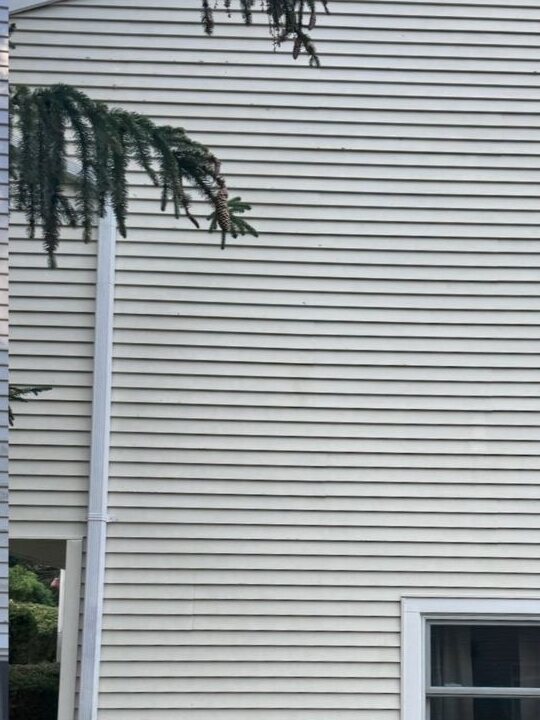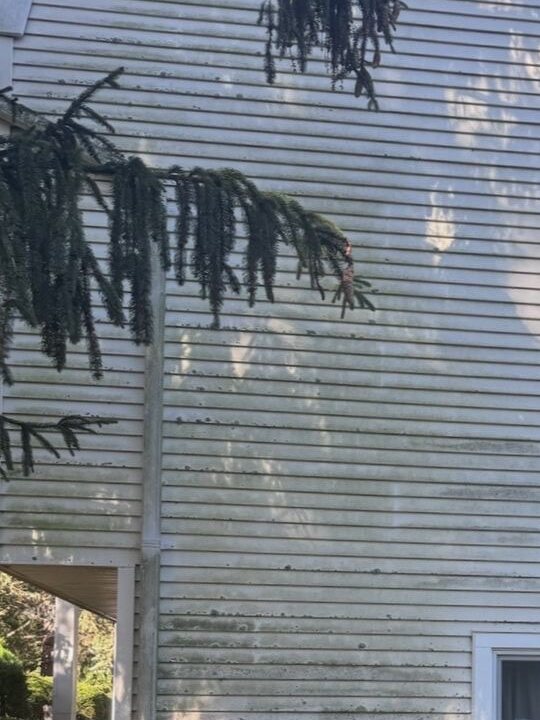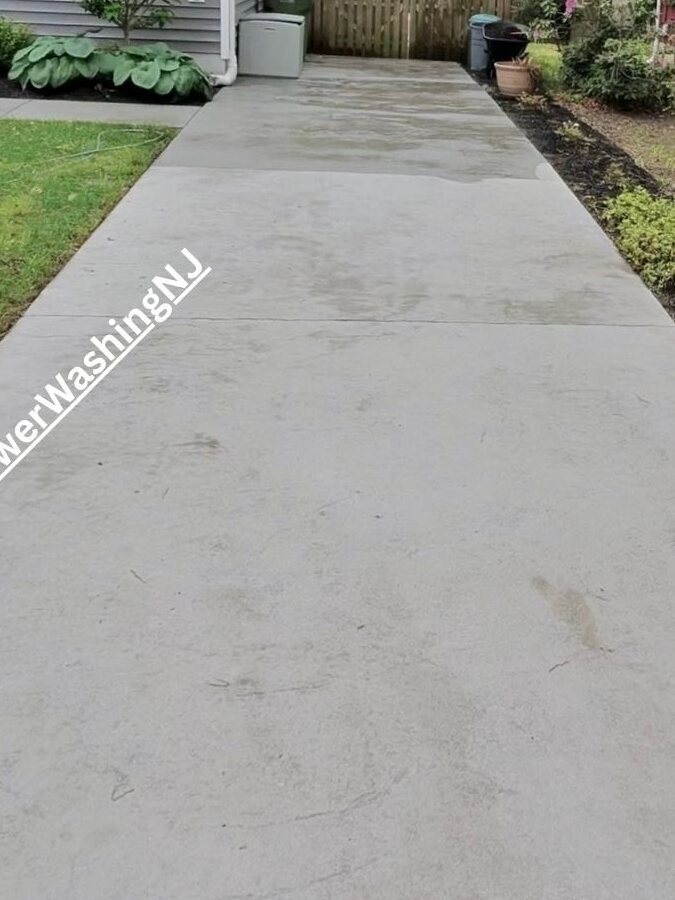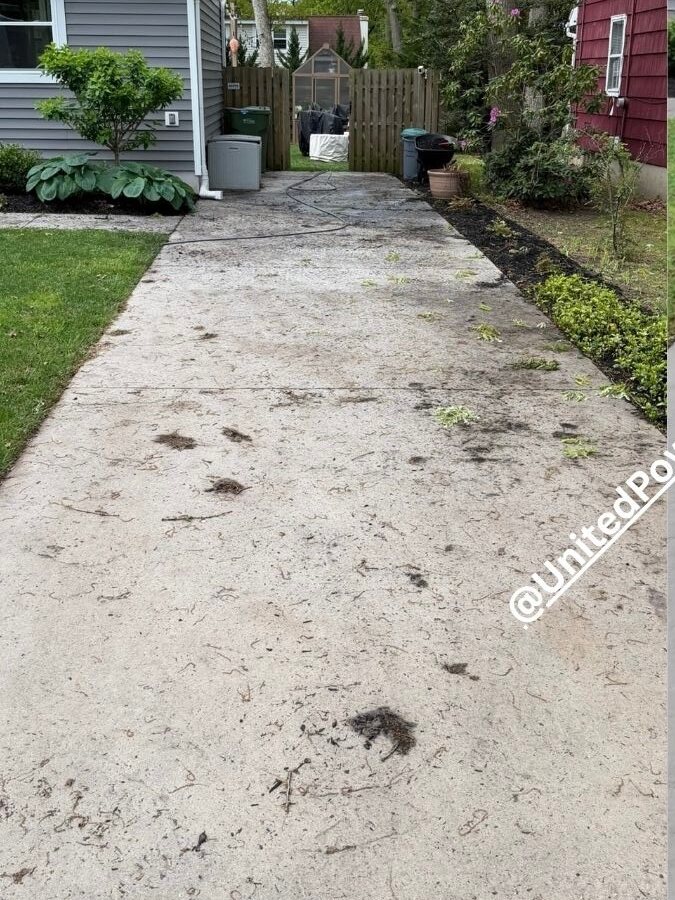
Can you pressure wash James Hardie or fiber-cement siding?
Technically yes — but only with low pressure and the right technique. Manufacturer care guidance favors gentle low-pressure rinsing (well under 1,500 PSI with a wide tip) combined with a soft brush, or true soft washing at around 100 PSI. Standard pressure washing at 2,000–3,000 PSI can erode the surface, chip the factory paint finish, and drive water behind the boards. In Ocean County, soft washing is the method we recommend for every Hardie-sided home.
James Hardie siding is tough — it's designed to resist rot, pests, and harsh coastal weather. But 'tough' does not mean 'pressure-wash-proof.' The factory ColorPlus finish and the fiber-cement substrate both have limits, and a standard pressure washer in the hands of someone who doesn't know those limits can do real, lasting damage.
If you're a homeowner wondering whether to rent a washer or call a pro, this guide gives you the full picture: what Hardie's own guidance says, why high pressure is a problem, what the safe methods look like, and how often you need to clean siding on the Jersey Shore. We also cover what damage from incorrect washing looks like so you know what to watch for.
What is James Hardie / fiber-cement siding, and why is it everywhere on NJ shore homes?
James Hardie is the dominant brand of fiber-cement siding — a composite of cement, sand, and cellulose fiber that resists rot, termites, and fire. It's the go-to siding on new construction and post-storm rebuilds across Ocean County because it handles coastal humidity far better than wood and doesn't dent like vinyl. Most Ocean County homes built or rebuilt after Hurricane Sandy (2012 onward) have some form of HardiePlank or HardiePanel.
Walk through Toms River, Brick, or Barnegat and you'll notice how common that lapped, painted plank look is on homes built in the last 10–12 years. A huge share of post-Sandy rebuilds from Little Egg Harbor to Point Pleasant went with fiber cement because insurers and builders alike recognized it as the more durable coastal choice.
Why fiber cement needs careful cleaning
Fiber cement is dense and hard, but it's not monolithic. Most HardiePlank is pre-finished with a factory-baked paint system called ColorPlus. That finish is what gives the boards their color and weatherproofing — and it's also what high-pressure water can damage. The underlying fiber-cement board itself can also absorb water if the surface is compromised. Think of it like ceramic tile: hard and durable, but chip the glaze and moisture gets in.
- HardiePlank lap siding — the most common profile, resembles wood planks, installed horizontally
- HardiePanel vertical siding — used for gable ends and board-and-batten looks
- HardieShingle — mimics cedar shake, common on dormer peaks and cottage-style homes
- HardieTrim — corner boards and trim boards that frame windows and doors
Ocean County saw thousands of new builds and elevated-home rebuilds after 2012. Contractors and homeowners chose fiber cement for its rot and moisture resistance in our coastal climate. That means a large share of Ocean County homes that are 5–12 years old are sided with Hardie products — and many owners are asking this cleaning question for the first time as those homes hit their first serious maintenance cycle.
What does James Hardie's own care guidance say about cleaning?
James Hardie's published maintenance guidance consistently favors low-pressure washing, not standard pressure washing. Their recommendations call for cleaning with a soft brush, a mild detergent solution, and a low-pressure rinse — avoiding high-pressure water that can damage the surface finish. While the exact wording of warranty terms varies by product line, the general position is that aggressive cleaning methods run contrary to proper care and can affect the long-term performance of the siding.
We're not going to invent specific warranty clauses here — Hardie updates their documentation and different product lines have different terms. What we can tell you is that the consistent theme across all of Hardie's homeowner care materials is: gentle is better. Soft brush, mild soap, low pressure.
The key points from manufacturer guidance
- Use a soft-bristle brush or low-pressure spray — not a stiff brush or high-pressure tip
- Mild detergent (like dish soap) is fine for routine cleaning; stronger solutions need care to avoid affecting the paint finish
- Rinse thoroughly after any cleaning product — residue left behind can affect the surface over time
- Do not use high-pressure water in a way that forces water behind boards, into seams, or against the direction of installation
- Keep the spray at an angle that follows the lap — never spray upward under a plank
The bottom line from a care standpoint: Hardie siding is meant to be cleaned, but it's meant to be cleaned gently. If you want to dig into the specifics, the James Hardie website publishes a homeowner maintenance guide you can download by product line. But for most Ocean County homeowners, the practical answer is: hire someone who does this correctly and let the cleaning method speak for itself.
This is the single most common pressure-washing mistake on HardiePlank. Each plank laps over the one below it. If you spray upward, you force water directly behind the boards — past the housewrap, into the sheathing. High pressure makes this far more likely. Always spray downward at an angle that follows the way the siding sheds water.
Why does high pressure damage fiber-cement siding?
High-pressure water — typically 2,000–3,000 PSI from a standard rental or contractor machine — hits fiber-cement siding with enough force to erode the factory paint finish, create micro-fractures in the board surface, chip edges and corners, and blast water behind the panels at seams and laps. The damage is often subtle at first: you may not see it until the next paint cycle, or until moisture infiltration has been happening quietly for a season.
Here's why PSI matters so much: a garden hose delivers roughly 40–60 PSI. A soft-wash system runs around 100 PSI — barely above garden hose pressure, with a cleaning solution doing the actual work. A standard pressure washer puts out 1,500–3,000+ PSI. That's 25–50 times the pressure of a garden hose aimed directly at a painted surface from a few feet away. Fiber cement can take a lot, but not that.
| Pressure level | Source | Safe for Hardie siding? |
|---|---|---|
| 40–60 PSI | Garden hose | Yes — routine rinsing |
| ~100 PSI | Soft-wash system | Yes — this is the pro method |
| 500–1,000 PSI | Light pressure washer, 40-degree tip, maintained distance | Marginal — operator skill-dependent |
| 1,500–2,000 PSI | Standard pressure washer | No — risk of paint damage and water infiltration |
| 2,000–3,000+ PSI | Heavy pressure washer or surface cleaner | No — will damage siding; never do this |
PSI alone is not the whole story — tip angle, distance from surface, and direction of spray all matter. But high PSI is the primary risk on fiber-cement siding.
There's also a cumulative damage problem. One aggressive wash might not visibly destroy the finish — but each pass erodes it a little more. Paint that should last 15 years starts peeling at 6. And once moisture gets into the fiber-cement board itself through compromised paint or a hairline fracture, you're looking at swelling and eventual rot — the exact problem Hardie is supposed to prevent. Learn more about why method matters in our soft washing vs. pressure washing guide.
What is the correct way to clean James Hardie siding?
There are two safe approaches: (1) low-pressure washing under roughly 1,500 PSI with a 40-degree wide-angle tip, soft brush, and mild detergent — the DIY-compatible method if you're careful; (2) true soft washing at around 100 PSI with a professional cleaning solution — the method pros use. Soft washing is the safer of the two because the chemistry does the cleaning, so there's no temptation to crank the pressure up when a stubborn spot won't come off.
Method 1: Low-pressure washing with a soft brush (DIY-compatible)
If you're cleaning your own Hardie siding, this is the approach to take. It requires discipline — the hardest part is resisting the urge to increase pressure when a section isn't cleaning fast enough. Mix a mild detergent (ordinary dish soap works for routine cleaning), scrub with a soft-bristle brush, and rinse with a wide-angle tip at safe distance. The brush does the mechanical work so the rinse just needs to carry debris away.
Method 2: Soft washing (the preferred pro method)
Soft washing applies a professional-grade cleaning solution — typically a diluted sodium hypochlorite blend with surfactants — at very low pressure. The solution kills mold, mildew, and algae at the biological root rather than physically blasting them off the surface. This means the cleaning is gentler on the siding, lasts much longer (because the organisms are dead rather than just relocated), and handles the green-and-black growth that's endemic to Ocean County's coastal environment. Our house washing service uses this method on every Hardie-sided home we clean.
The two methods aren't mutually exclusive — a good pro will soft wash the broad field of the siding and use a brush on stubborn spots or areas with heavy buildup. What they will not do is reach for a high-pressure tip when something doesn't come clean on the first pass.
| Feature | Low-pressure wash (DIY) | Soft washing (pro) |
|---|---|---|
| Pressure used | Under 1,500 PSI, wide tip | ~100 PSI |
| Cleaning agent | Mild detergent + scrubbing | Professional solution (kills organisms) |
| Hardie-safe? | Yes, if technique is correct | Yes — this is the recommended method |
| Mold/algae killed? | Surface removed, may regrow | Killed at root — stays clean longer |
| Suitable for DIY? | Yes, with care | No — requires pro equipment and training |
| Risk level | Moderate (technique-dependent) | Low |
Both methods are safe for Hardie siding when done correctly. Soft washing is lower-risk and produces longer-lasting results.
Ask: 'What pressure do you use on Hardie siding?' A contractor who knows what they're doing will say something like 'very low pressure — we soft wash it with a cleaning solution.' If they say '2,500 PSI' or start talking about a 25-degree tip, find someone else. See our house washing service page for details on what a proper visit looks like.
How to safely clean Hardie siding: step-by-step
This is the process for homeowners cleaning their own fiber-cement siding using the low-pressure method. If your home is two stories or you have heavy mold or algae growth, a professional soft wash is the safer call — both for the siding and for working at height safely.
Safe Hardie siding cleaning process — low-pressure method:
- 1Protect plants and surfaces below
Pre-soak any landscaping within splash range with a garden hose. Cover HVAC units and any painted or metal surfaces below the work area. Hardie cleaning solutions — even mild detergents — can affect plants and metal if left to concentrate.
- 2Mix your cleaning solution
For routine grime and light mildew, a mild dish-soap dilution works well. For heavier mold or algae growth (common on north-facing walls in Ocean County), a diluted oxygen bleach solution or a product labeled safe for painted siding is more effective. Follow label directions carefully.
- 3Wet the siding from top to bottom
Start at the top and work down. Always work in the direction the boards shed water — spray downward, never upward under a lap. Pre-wetting the surface prevents the cleaning solution from drying before it can work.
- 4Apply your cleaning solution and let it dwell
Apply the solution and let it sit for 3–5 minutes (longer for heavy buildup, but don't let it dry on the surface). The dwell time is what actually loosens the organic growth — it saves you from having to scrub hard or increase pressure.
- 5Soft-brush any stubborn areas
Use a soft-bristle brush — a car-wash brush or a soft deck brush works well — on any spots that need extra attention. A soft brush is far safer than extra pressure. Scrub with the lap direction, not against it.
- 6Rinse thoroughly — still top to bottom
Use a garden hose or a pressure washer set to wide-angle (40-degree tip), kept at least 12–18 inches from the surface, and directed downward. Never angle the spray upward under the laps. Rinse until all cleaning solution is completely gone — residue left behind can dull the paint finish over time.
- 7Rinse your landscaping again
Give plants another thorough flush with clean water after you're done, even if they seemed protected. This dilutes any cleaning product that splashed or drifted.
- 8Inspect the results — and note anything that didn't come clean
Walk the perimeter when the siding is wet and again when it dries. If there are areas that didn't clean up fully, note them for a follow-up rather than going back with more pressure. Persistent staining on fiber cement can sometimes indicate water damage in the board itself.
How often should you clean James Hardie siding at the Jersey Shore?
At the shore, we recommend cleaning Hardie siding twice a year: once in spring (April–May) and once in fall (September–October). Ocean County's salt air, humidity, and frequent pine and deciduous tree cover create aggressive mold and algae growth conditions. Annual cleaning is the minimum — twice a year is better for homes in heavy shade or within a half mile of the bay or ocean.
Fiber cement holds paint better than wood, but it's not immune to the biological growth that coats the Jersey Shore environment. Salt carried in from the bay or ocean lands on every surface and creates a substrate that mold and algae love. A north-facing wall that gets little direct sun can go from clean to visibly green in a single season. Check out our full guide on how often to wash your home on the Jersey Shore for a seasonal calendar.
| Situation | Recommended cleaning frequency |
|---|---|
| Standard Ocean County home, moderate sun | Once a year (spring) |
| North-facing walls, heavy shade, or tree cover | Twice a year (spring + fall) |
| Within 0.5 mile of bay or ocean | Twice a year (spring + fall) |
| Darker paint colors (show salt haze) | Twice a year |
| After a major storm or hurricane | Inspect and clean as needed |
These are general guidelines. If you're seeing visible growth before the season ends, clean sooner rather than letting it establish.
The cost of a professional house washing is typically $299–$450 for an average Ocean County home — a fraction of what you'd spend on a paint recoat, which becomes necessary faster when mold and algae are allowed to sit on the surface season after season. For a full breakdown, see our Ocean County house washing cost guide.
The combination of salt air from Barnegat Bay and the Atlantic, high relative humidity from late spring through fall, and heavy pine and oak tree cover in towns like Manchester, Jackson, and Lacey creates ideal conditions for mold and algae. Hardie is the right siding for this environment — but that doesn't mean it cleans itself. Shore homeowners who skip years between cleanings often find the mold has started to affect the paint before they notice it from the street.
Should you DIY or hire a pro to clean Hardie siding?
For a single-story home with light annual cleaning, a careful DIY approach is workable if you follow the low-pressure method. For two-story homes, heavy mold or algae growth, or any time you're uncertain about technique, hiring a professional soft-wash crew is worth it — the cost of a mistake on painted fiber-cement siding is much higher than the cost of the cleaning visit.
When DIY makes sense
- Single-story home, all areas reachable from the ground
- Light routine cleaning with minimal biological growth
- You're comfortable with a soft-brush-and-rinse process and won't be tempted to increase pressure
- You understand how Hardie siding laps and can keep all spray directed downward
When to hire a professional
- Two stories or higher — ladder + pressure washer is a genuine safety hazard, and pros work from the ground with extension wands
- Heavy mold, algae, or years of buildup — this is where soft-wash chemistry earns its keep; a rinse won't cut it
- You're not sure about technique — a misstep on Hardie paint finish is a multi-thousand-dollar repaint, not a rinseable mistake
- You want it to stay clean longer — professional soft washing kills the organisms at the root; the results last 2–3x as long as a manual scrub-and-rinse
- Pre-sale or post-storm cleanup — you want it done right, fast, and documented
For most Ocean County homeowners with Hardie-sided homes, the twice-a-year clean is easiest handled by a professional. The price point — typically $299–$450 for a full house soft wash — is comparable to many DIY supply costs when you factor in solution, equipment, and your time. Get a quote for your specific home and situation.
Signs your Hardie siding was washed incorrectly
The most common signs that fiber-cement siding was pressure washed incorrectly are: visible paint chipping or peeling (especially near the top edge of each plank where upward spray concentrates), surface erosion or a dulled finish, swirl marks or scoring on the board face, and — worst case — swollen or soft spots indicating water infiltration behind the siding.
Some damage is immediate and visible. Some shows up a season later when the compromised paint begins to peel or the board begins to swell from repeated moisture exposure. If you've moved into a home and aren't sure how the previous owner maintained the siding, look for these warning signs before you schedule your first professional clean.
- Paint chipping or peeling — especially along top edges of planks where upward spray impacts; early peeling that shouldn't happen on relatively new siding
- Dulled or chalky finish — the original ColorPlus finish has a consistent sheen; erosion from high pressure creates flat or chalky patches
- Swirl marks or score lines — visible circular or linear scratches from a spinning tip or held-too-close wand
- Cracked or fractured board edges — fiber cement can develop hairline cracks at edges when hit with excessive pressure, especially in corners and at cut ends
- Water staining at seams or window frames — suggests water has been forced behind the siding; look for rust staining from fasteners or dark staining from moisture-damaged sheathing
- Soft or spongy spots — press gently along the board face; any softness or flex indicates moisture in the board and potentially the sheathing behind it
- Mold growing back extremely fast — if the siding was pressure-washed without a killing solution, the mold and algae were only knocked back, not eliminated; they regrow faster on a surface that's been abraded
James Hardie offers a paint finish warranty on their ColorPlus products. That warranty generally excludes damage caused by improper cleaning methods. If you have a contractor telling you they'll power wash your Hardie siding with a standard pressure washer, ask them about their liability if the finish is damaged — because yours, not theirs, is what's at stake. Our house washing service uses only low-pressure soft washing on fiber-cement siding.
If you spot any of these signs, the next step is an assessment before the next cleaning — not more pressure washing. A qualified contractor can evaluate whether the issue is surface-only (repaintable) or involves moisture in the substrate (a bigger repair). See what a professional soft-wash approach looks like compared to the high-pressure alternative in our soft washing vs. pressure washing guide.
Frequently asked questions
Only with low pressure and the right technique. Manufacturer care guidance favors gentle low-pressure rinsing (under roughly 1,500 PSI with a wide 40-degree tip) combined with a soft brush. Standard pressure washing at 2,000–3,000 PSI risks damaging the factory paint finish, eroding the board surface, and forcing water behind the panels. Professional soft washing at around 100 PSI is the safest method — it uses cleaning chemistry instead of force.
True soft washing runs around 100 PSI — barely above garden-hose pressure. If you're using a pressure washer yourself, stay well under 1,500 PSI with a wide-angle (40-degree) tip, keep the wand at least 12–18 inches from the surface, and always spray downward following the lap direction. Never spray upward under the planks. When in doubt, less pressure and more dwell time with a cleaning solution is always safer.
Twice a year is ideal for Ocean County homes — once in spring to clear winter salt and grime, and again in fall before the wet season. Single-story homes in light-shade areas may get by with once a year, but north-facing walls, shaded spots, or homes near the bay or ocean grow mold and algae fast enough to warrant spring and fall cleanings. Annual minimum; biannual recommended.
Hardie's care guidance consistently recommends low-pressure cleaning and cautions against aggressive washing methods. While we won't cite specific warranty clause language — terms vary by product line and change over time — the general position from the manufacturer is that improper cleaning runs counter to proper maintenance. If a contractor damages your ColorPlus finish with a high-pressure washer, you may find your recourse limited. Always use low-pressure or soft-washing methods.
A professional soft-wash house washing in Ocean County typically runs $299–$450 for an average 2-story home. Smaller ranches or Cape Cod-style homes are usually $250–$350; larger homes or those with heavy algae growth run $450–$650. That's significantly less than the cost of repainting fiber-cement siding, which runs several thousand dollars. See our full [NJ house washing cost guide](/cost/how-much-to-power-wash-a-house-in-nj) for a detailed breakdown.
Steve Franco was born and raised in Toms River and started power washing at a young age. He founded United Power Washing to do exterior cleaning the right way: soft washing that kills mold at the root without damaging siding or roofs. A licensed, insured and bonded NJ contractor, he writes these guides to give Jersey Shore homeowners straight, no-nonsense answers.