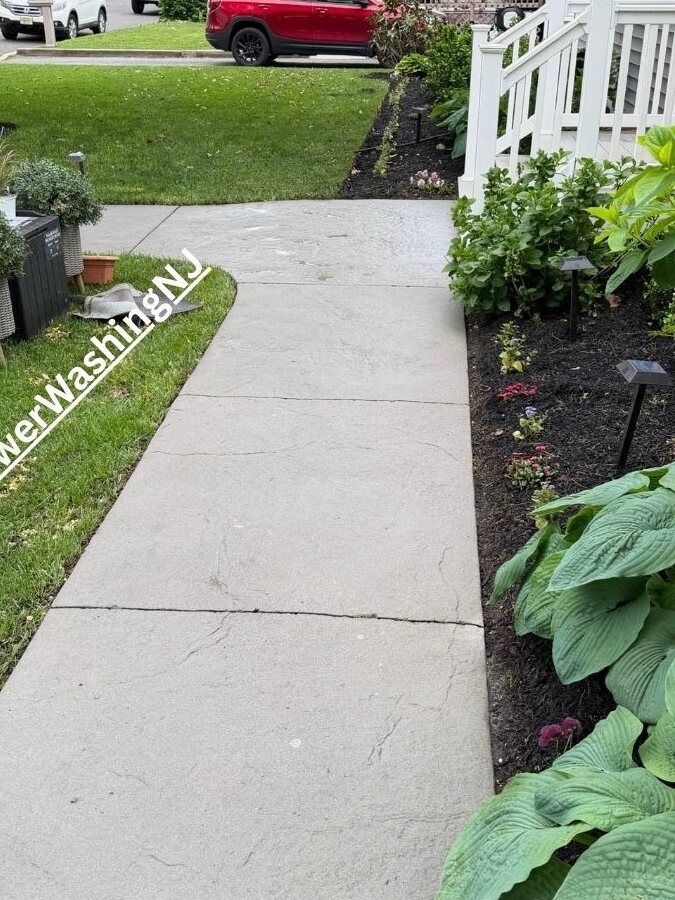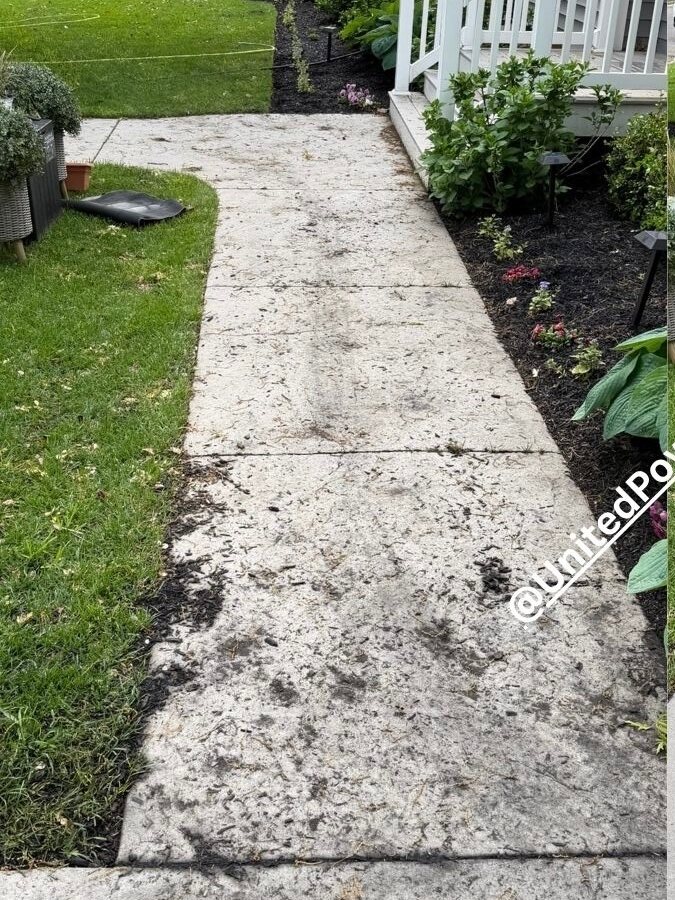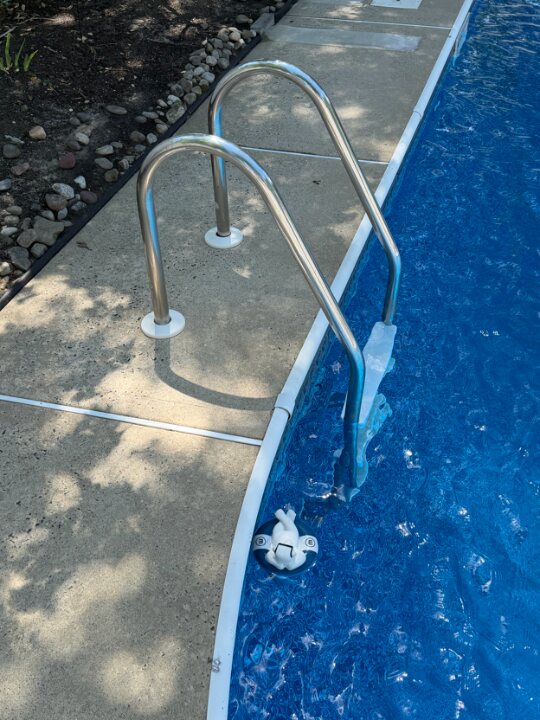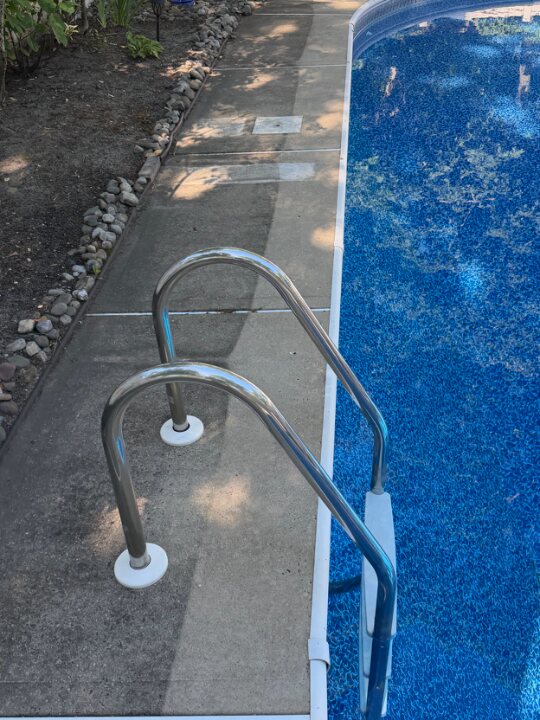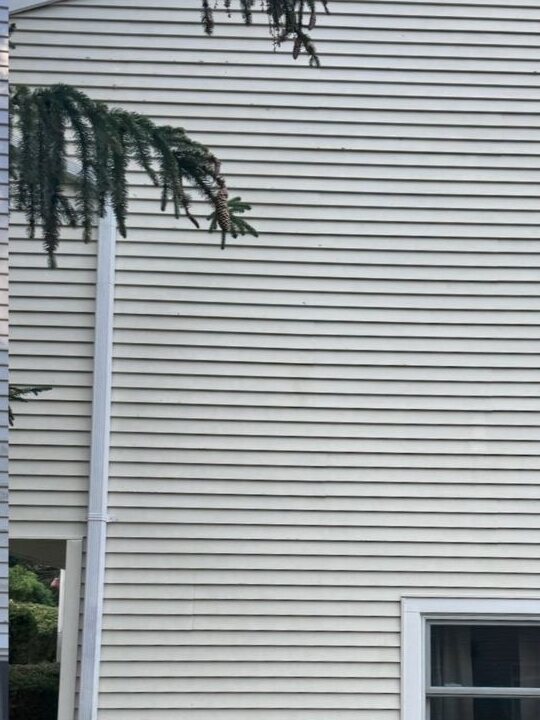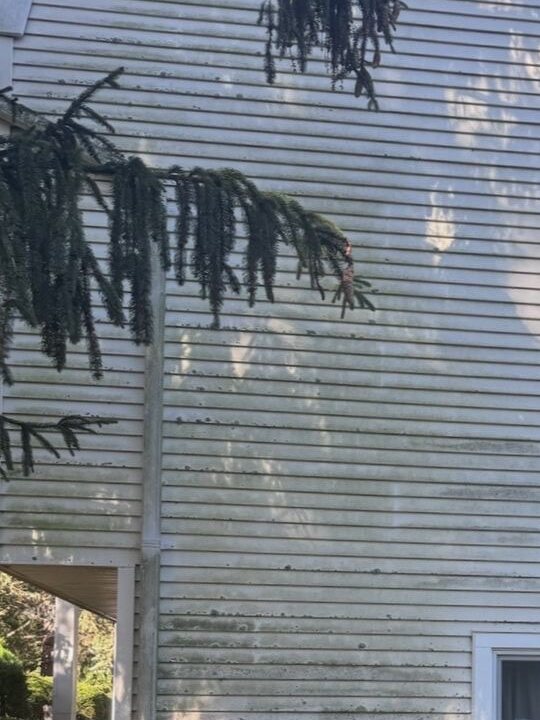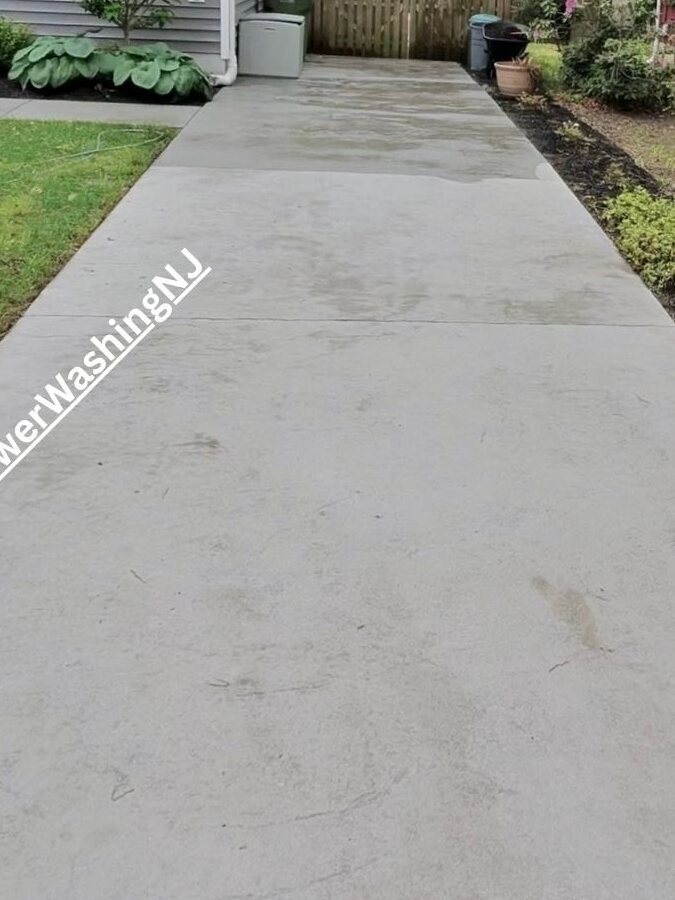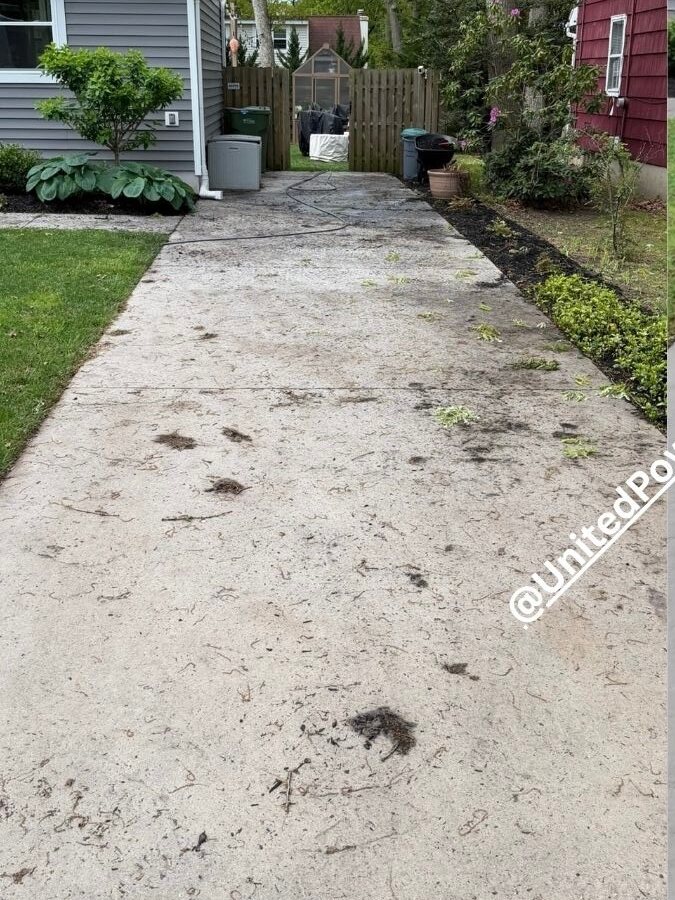
How much does it cost to pressure wash a driveway in Ocean County?
Pressure washing a standard concrete driveway in Ocean County, NJ is a flat $100 with United Power Washing — oil and rust stain treatment included. Adding a penetrating sealer runs $0.50–$1.50 per sq ft. Every job includes a surface-cleaner pass, edge detailing, and a post-rinse of surrounding landscaping.
We keep driveway pricing simple: a flat $100 for a standard concrete driveway, no per-square-foot math. The condition of the surface still shapes the work — a driveway with ground-in oil spots, heavy rust staining from sprinkler iron, or a thick layer of algae needs more pre-treatment — but that stain treatment is built into the price, so the number you're quoted is the number you pay.
| Driveway type | Ocean County price |
|---|---|
| Standard concrete driveway (any size) | $100 flat |
| Paver driveway | $100 flat |
| Add penetrating sealer | +$0.50 – $1.50 per sq ft |
Prices reflect Ocean County, NJ as of mid-2026. Oil and rust stain treatment is included.
Want the full price breakdown with all the variables? See our driveway pressure washing cost guide for an itemized look at what moves the number up and down.
What should you spray on a driveway before pressure washing?
What you spray on a driveway before pressure washing depends entirely on the stain type. Oil and grease need a degreaser or alkaline cleaner; rust and orange sprinkler stains need an oxalic- or citric-acid-based rust remover; organic growth like algae, mildew, and moss needs a diluted sodium hypochlorite solution. Applying the right pre-treatment and letting it dwell is the single most important step — skipping it means the stain stays.
High-pressure water alone moves dirt, but it cannot break the chemical bond of oil, oxidize iron deposits, or kill algae spores. Pre-treatment does that work. Think of it like doing the dishes: the soap is what cleans, the water just rinses. Skipping pre-treatment and blasting with 3,000 PSI is the most common reason driveways look 'good enough' but still have staining.
| Stain type | What removes it | Dwell time |
|---|---|---|
| Oil / grease | Alkaline degreaser or Purple Power-type cleaner | 10–20 min |
| Rust / orange iron stains (sprinklers) | Oxalic-acid or citric-acid rust remover (e.g., F9 BARC, Rust-X) | 5–15 min |
| Algae, moss, mildew (green/black) | Diluted sodium hypochlorite (bleach) + surfactant | 5–10 min |
| Tire marks / rubber | Solvent-based degreaser | 10–15 min |
| Efflorescence (white salt haze on pavers) | Mild acid wash (muriatic or proprietary efflorescence cleaner) | 5–10 min |
| Battery acid / fertilizer burn | Alkaline neutralizer, then rinse thoroughly | 10 min |
| General grime, dirt, algae film | All-purpose exterior cleaner or degreaser | 5–10 min |
Always rinse pre-treatment product off before and after pressure washing to avoid leaving residue.
Wet the concrete lightly before applying your degreaser or rust remover. A dry surface absorbs the product too fast before it has time to dwell and break down the stain. Wet it, apply, wait the full dwell time, agitate if needed with a stiff brush on heavy stains, then pressure wash.
If you are hiring a professional, ask specifically whether they pre-treat before washing. We apply targeted pre-treatments on every driveway and concrete cleaning job — it is the difference between a clean driveway and a merely washed one.
How do you remove rust and orange sprinkler stains from a driveway?
Rust and orange iron stains on driveways are removed with an acid-based rust remover — oxalic acid or citric acid products are the standard. Apply to a wet surface, let it dwell 5–15 minutes, scrub stubborn spots, and rinse. Pressure alone will not remove rust staining; you need the chemistry to convert the iron oxide before washing.
This is one of the most common driveway problems in Ocean County, and it has a very specific cause: well water with high iron content. Thousands of homes here run irrigation systems fed from private wells, and every time those sprinklers run, they deposit a thin mist of iron-laden water onto the concrete. Over a season, this builds into the orange and rust-colored staining you see creeping across the driveway from the edges closest to the lawn.
Well water in much of Ocean County — Toms River, Brick, Jackson, Lakewood, Barnegat — tests high in iron. If your driveway has orange rust staining near the lawn edges or wherever sprinkler heads reach, it is almost certainly iron deposit from your irrigation system. Standard cleaning will not touch it. You need an oxalic- or citric-acid rust remover applied before the wash. We treat this on a large share of the driveways we clean in this area.
What actually works on iron / rust stains
- F9 BARC (Battery Acid Restoration Cleaner) — the industry standard for iron and rust stains on concrete; professional-grade but available to consumers.
- Oxalic acid powder mixed to solution — effective and inexpensive; available at hardware stores. Wear gloves and keep off plants.
- Citric acid cleaners — milder, plant-safer option for lighter staining.
- Rust-X and similar retail products — fine for light to moderate staining; may need a second application on heavy deposits.
- What does NOT work: plain pressure washing, bleach, degreasers, or dish soap. These are not designed to react with iron oxide.
Even after a professional rust treatment, very heavy multi-season deposits may lighten significantly rather than disappear completely — especially if the iron has etched into the pore structure of the concrete. We will always tell you honestly what to expect before we start rather than promise a miracle. The long-term fix for sprinkler rust is a whole-house iron filter on the well, but that is a separate conversation.
Does it matter whether my driveway is concrete, pavers, or asphalt?
Yes — significantly. Each surface needs a different pressure setting, technique, and in some cases a different cleaning chemistry. Using the wrong approach on the wrong surface is how you end up with gouged joints, etched asphalt, or a paver patio with half the sand washed out.
Concrete driveways
Concrete is the most forgiving surface to pressure wash. It handles 2,500–3,000 PSI comfortably, and a surface cleaner gives an even, swirl-free finish. Pre-treat stains first, run the surface cleaner in overlapping passes, then detail the edges and expansion joints with a wand. Concrete responds extremely well to sealing afterward — a penetrating sealer resists future oil and rust staining and slows algae regrowth.
Paver driveways and patios
Pavers need more care. The pressure needs to come down — typically 1,500–2,000 PSI — and the surface cleaner tip should be kept moving to avoid dislodging the polymeric sand in the joints. If your paver joints are already sandy and open, aggressive pressure will flush them out completely, leaving you with shifting, weed-prone pavers. A professional job includes re-sanding the joints after washing and then sealing to lock everything in place. Our paver cleaning and sealing service covers the full process.
Asphalt driveways
Asphalt is the most sensitive of the three. It is soft and oil-based, which means high pressure can gouge it, and certain chemical degreasers will actually soften and break down the binder. Asphalt cleaning is generally gentler — lower pressure, a mild cleaner, and careful technique around cracks. Asphalt is also best sealed with an asphalt-specific sealer (not concrete sealer) after cleaning.
| Surface | Recommended PSI | Key technique | Seal after? |
|---|---|---|---|
| Concrete | 2,000 – 3,000 PSI | Surface cleaner for streak-free finish | Yes — penetrating sealer |
| Brick pavers | 1,200 – 2,000 PSI | Lower pressure, protect joints, re-sand | Yes — critical for pavers |
| Asphalt | 1,000 – 1,500 PSI | Keep moving, avoid solvent-based cleaners | Yes — asphalt-specific sealer |
Not sure which surface you have or what method is right? Get a free quote and we will walk you through it before any work starts.
How do you properly prepare and pressure wash a driveway step by step?
Proper prep is what separates a result that lasts from one that looks decent for two weeks. Here is the sequence we follow on every residential driveway job in Ocean County.
Follow these steps for a thorough, even, streak-free driveway clean:
- 1Clear the surface and protect surroundings
Move vehicles, trash cans, and anything stored on or near the driveway. Wet down nearby grass, plants, and flower beds — this dilutes any cleaning product overspray and protects roots. Close garage doors and cover any exposed entry thresholds.
- 2Identify your stain types
Walk the driveway and note what you are dealing with: oil spots, rust/orange patches near lawn edges, green algae film, tire marks, or just general grime. Each type gets its own pre-treatment, so identify before you buy or mix anything.
- 3Apply targeted pre-treatments and let them dwell
Wet the concrete, then apply your pre-treatment products to the appropriate stains — degreaser on oil, rust remover on iron stains, diluted bleach on algae. Let each product dwell for the full recommended time (5–20 minutes depending on product). Agitate heavy stains with a stiff-bristled brush. Do not let the product dry on the surface.
- 4Apply a general all-surface cleaner to the whole driveway
After spot-treating, apply a general exterior cleaner or diluted degreaser across the whole surface and let it dwell briefly. This ensures even cleaning across sections that did not have specific stains.
- 5Wash with a surface cleaner attachment
A surface cleaner (the spinning disk head that connects to your pressure washer) is what gives you a streak-free, even result. A wand alone leaves overlapping wand lines that are obvious when the driveway dries. Run the surface cleaner in overlapping passes across the full driveway.
- 6Detail edges and expansion joints with a wand
The surface cleaner cannot reach the edges of the driveway, the garage apron, curbing, or expansion joints. Follow up with a wand at an angle to clean these areas, being careful not to blast mortar out of paver joints.
- 7Rinse thoroughly and rinse surrounding landscaping
Do a final rinse of the full driveway to flush all cleaning product residue. Then rinse nearby plants and grass again to dilute any product that landed on them.
- 8Inspect, re-treat any stubborn spots, and allow to dry before sealing
Once the surface dries slightly, inspect for any remaining stains. Stubborn oil or rust spots may need a second application. If you plan to seal, wait a minimum of 24–48 hours after washing for the concrete to dry fully — applying sealer to damp concrete traps moisture and causes cloudiness.
Holding a pressure washer wand in one spot too long, using a zero-degree tip, or running 3,500+ PSI on older or softer concrete will etch the surface — removing the top layer of cement paste and leaving a rough, almost sand-blasted texture. Once concrete is etched, it cannot be reversed without grinding. Use a surface cleaner, keep the equipment moving, and match pressure to the age and condition of the surface.
Why does a surface cleaner matter, and how is it different from a wand?
A surface cleaner is a rotating disk attachment with two or more spinning spray nozzles enclosed in a shroud. Because the nozzles spin in a consistent arc at a fixed height, they clean with perfectly even pressure — no overlap lines, no wand streaks. It is the single biggest difference between a professional driveway result and a DIY result.
When you use a wand, you are moving a single, high-pressure stream across the surface in overlapping arcs. Unless you are extremely consistent, those overlaps leave visible lines — light and dark stripes across the driveway that only appear when it dries. A surface cleaner eliminates this entirely. It also contains the water spray (less splash-back onto your vehicle and siding) and covers ground faster.
- Even pressure across the full surface — no hot spots, no stripes.
- Faster coverage — a 20-inch surface cleaner covers twice the area per pass of a wand.
- Less overspray — the shroud keeps water from splashing your siding, car, and landscaping.
- Better on large flat areas — the wand still has a role at edges, joints, and detailed areas where the disk cannot reach.
If you are renting equipment for a DIY job, look for a surface cleaner attachment — most equipment rental shops in Ocean County carry them. They are the upgrade that makes the biggest difference in the final result. See our full comparison of soft washing vs. pressure washing techniques for more on matching equipment to surface type.
Should you seal a driveway after pressure washing?
Yes, sealing is worth it on both concrete and pavers. A penetrating sealer on concrete resists future oil and rust staining, slows algae regrowth, and helps the surface withstand freeze-thaw cycles. On pavers, sealing also locks in the joint sand to stop weed growth and prevent shifting. Budget $0.50–$1.50 per sq ft for sealer in Ocean County.
Here is the honest case for and against sealing so you can decide what makes sense for your property.
Why sealing is worth it
- Stain resistance — a sealed surface is far easier to clean the next time. Oil from car leaks, rust from irrigation, and leaf tannins bead up instead of penetrating.
- Slower algae and mildew regrowth — Ocean County's humidity means concrete will start growing a green film within a season. A sealer slows this dramatically.
- Freeze-thaw protection — water seeping into pores, freezing, and expanding accelerates spalling and cracking in NJ winters. Sealer reduces this.
- Joint stability on pavers — sealing with a joint-sand stabilizer locks the sand in place and chokes out weeds.
When you might skip it
- If the driveway is heavily cracked or near end of life — sealing delays replacement but does not prevent it.
- If you plan to resurface or apply a concrete overlay in the near term — sealing first can interfere with adhesion.
- Budget constraints — sealing is a meaningful add-on cost. A good pressure wash alone is still a major improvement.
For paver driveways and patios, we almost always recommend sealing as part of the same visit — see our paver sealing service for what is included. For a concrete driveway, the penetrating sealer we use does not change the appearance (no glossy wet-look unless you specifically want that) and typically lasts two to four years.
The best time to apply sealer is within a few days of cleaning, once the surface has dried fully (48+ hours). If you miss that window, wait a full 30 days for the concrete to cure and off-gas before sealing. Applying to a freshly washed surface that has not dried traps moisture and causes the sealer to turn white or peel.
DIY rental vs. hiring a pro — is it worth it for a driveway?
Renting a pressure washer runs $60–$100 per day in Ocean County; renting a surface cleaner attachment adds $25–$40. That is reasonable for a straightforward driveway with no heavy staining. For driveways with oil, rust, or algae that need pre-treatment — or any paver surface — the results gap between a well-equipped pro and a rental job is significant.
Here is an honest breakdown of when each approach makes sense.
DIY rental makes sense when:
- Your driveway is concrete with light-to-moderate grime and no major staining.
- You have a few hours and are comfortable with pressure equipment.
- You rent a surface cleaner attachment (do not skip this).
- Budget is tight and the job is small — a 1-car driveway is very manageable as a DIY project.
Hire a pro when:
- You have oil, rust, or heavy staining — pros carry commercial-grade degreasers and rust removers that are dramatically more effective than retail options.
- You have pavers — wrong pressure or technique washes out the joint sand and damages the surface. Pavers warrant a professional every time.
- You want to seal — sealing requires the right product, correct dry time, and application technique. A botched seal job looks worse than no sealer.
- The driveway is large or the job needs to be fast — commercial equipment covers a 1,500 sq ft driveway in under two hours; a rental machine may take the full day.
The price difference between a DIY rental and hiring us for a 2-car driveway is often $50–$100 when you factor in the rental, pre-treatment products, your time, and cleanup. For most homeowners that math favors the pro — especially when you add rust or oil treatment. Request a quote and we will give you a firm price before you commit to anything.
Frequently asked questions
In Ocean County, United Power Washing charges a flat $100 to pressure wash a standard concrete driveway, with oil and rust stain treatment included. Adding a penetrating sealer adds $0.50–$1.50 per sq ft. Most jobs take 1–2 hours with commercial equipment.
Orange and rust-colored staining on a driveway is almost always iron deposit from irrigation water. Homes with private wells in Ocean County — Toms River, Brick, Jackson, Barnegat — often have high iron content in the water. Every sprinkler cycle deposits a thin mist of iron-laden water on the concrete, and it builds up into rust staining over a season. An oxalic- or citric-acid rust remover applied before pressure washing removes it; regular cleaning or pressure alone will not.
Apply an alkaline degreaser to the oil stain on a wet surface, let it dwell for 10–20 minutes, agitate with a stiff brush on heavy spots, then pressure wash. Commercial-grade degreasers like Purple Power or professional enzymatic products work far better than dish soap or retail solutions. Very old, deep oil stains may lighten significantly but not vanish completely — we will tell you honestly what to expect.
Absolutely. A clean driveway is one of the highest-ROI curb-appeal improvements before a sale — it takes a few hours and costs a flat $100, but the visual impact is dramatic. Real estate agents consistently note that a stained or dirty driveway creates a negative first impression that buyers carry through the showing. Seal it while you are at it for maximum effect.
Wait a minimum of 48 hours after pressure washing before applying sealer to concrete — 72 hours is safer in Ocean County's humidity. The concrete needs to be completely dry before sealer goes on, or moisture gets trapped and the sealer turns milky white or peels. If the weather is overcast or temps are below 60°F, give it the full 72 hours.
Steve Franco was born and raised in Toms River and started power washing at a young age. He founded United Power Washing to do exterior cleaning the right way: soft washing that kills mold at the root without damaging siding or roofs. A licensed, insured and bonded NJ contractor, he writes these guides to give Jersey Shore homeowners straight, no-nonsense answers.